The Death of the Movie Star
The days of mystery and glamour when it comes to actors are gone. What we're left with are fly-by-night celebrities with almost no staying power.
The age of the movie star is over--and it's all social media's fault. Hollywood is entering a new era and it's coming at the expense of another. I'm not talking about the endless mergers, studio sales, or AI slop. And this isn't about the endless parade of remakes and reboots. I'm talking about the death of the icon--the movie star--and how we may never get it back.
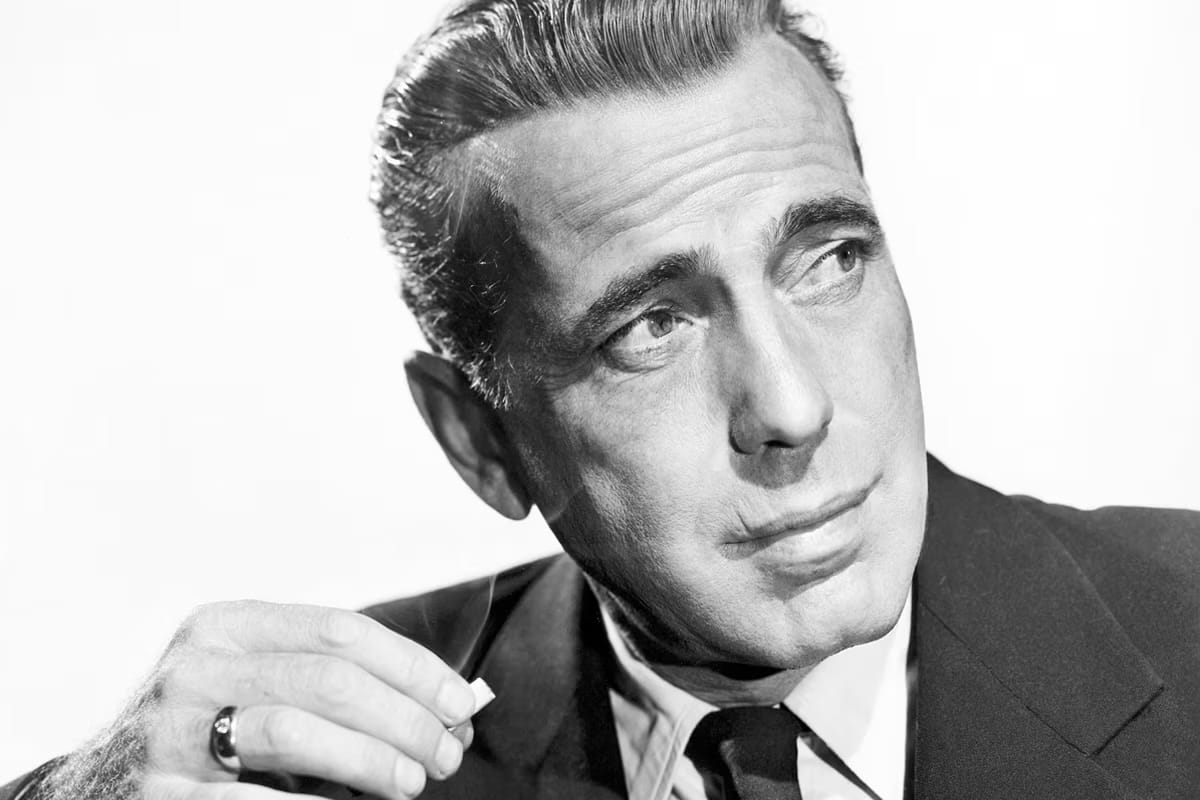
Certain names evoke a sense of glamour, of a "larger than life" essence that goes beyond the boundaries of the silver screen and becomes the stuff of legends. Humphrey Bogart, Jimmy Stewart, Rita Hayworth, Joan Crawford, Katharine Hepburn--I could go on for days just listing names of actors and directors who have influenced the media landscape for almost a hundred years.
But I've noticed lately, especially as we've been consistently losing icon after icon, that those days are now behind us...and the celebrities of the 21st century probably won't have their names etched in stone the way a Charlie Chaplin or Audrey Hepburn might. But why? Well, it comes down to several major factors.
For one, the studio system is gone. It was onerous and predatory, trapping actors in lengthy contracts where they had little control. Their roles were chosen for them, new names were chosen for them, partners were chosen for them--entire personas and images were crafted for them at the whim of a studio. The people we saw on stage and read about in magazines were products created by Hollywood. Even the roles they played were just variations on the characters the studio created for us to consume.
Just look at Clark Gable, who knew firsthand what would happen to a star who stepped out of line with his studio. In 1932, he told Photoplay magazine "I have never been consulted as to what part I would like to play. I am not paid to think." That comment, combined with his public bristling at being typecast at MGM as a misogynistic cad, the studio loaned him out to Columbia as punishment, where he made It Happened One Night. And he wound up winning an Oscar for his portrayal of a misogynistic cad.
Studios also made their actors sign morality clauses as part of their contracts, stipulations that prohibited debauchery, immoral behavior, extramarital affairs, and more. To the studios, films were not the only products being made and marketed to the public. So were the people who starred in them.
Classic Hollywood actors almost didn't seem real. They were 25 feet tall on our movie theater screens, gods upon Olympus for us to gaze at--not to tweet at, or make videos about on TikTok, or give fan art to at conventions. And because of that, they felt...untouchable, out of reach. And the industry liked it that way. An actor on a leash was an actor who didn't say the wrong thing to the press, who didn't have internet comments come back to haunt them years after they became successful, who did not seem human.
An actor WASN'T human. They were better - that's why they were up THERE and we were down HERE. But that also meant certain actors couldn't be their complete selves, either onscreen or in the public eyes. A number of performers were gay, but the studios or agents repping those individuals made sure the public never found out. And that's where Hedda and Louella come in.
Today, we no longer depend on mainstream media for our celebrity information and gossip. In the old days, before social media and cable TV and the internet, studios used to control what information about a certain star was released to the public, through their relationships with professional muckrakers and gossip columnists like Hedda Hopper and Louella Parsons.
Studios and talent agencies depended on gossip columnists to their PR departments, to either promote an up-and-coming star, or prevent the sordid details of an actor's life from getting out. Louella and Hedda had no compunctions about taking the occasional bribe or favor to push a certain story--or bury one.
In 1955, Confidential magazine threatened to out Rock Hudson, a popular actor who had appeared in Winchester '73 and Magnificent Obsession. Hudson's agent, Henry Willson, not only threw two of his other clients under the bus--Tab Hunter and Rory Calhoun--but he also orchestrated a lavender marriage between Hudson and his own secretary, Phyllis Gates.
It was a secret ceremony between the two, until Willson phoned Hedda and Louella and let them know Hudson had tied the knot, putting to bed any rumors about the actor's sexuality.
Heck, Parsons was practically the only game in town for a while, until MGM head Louis B. Mayer helped install Hopper as her rival. According to the book Hedda Hopper’s Hollywood: Celebrity Gossip and American Conservatism, Hopper said quote "'Writing a column is the only job ever handed to me on a silver platter.' Marion Davies, an actress and longtime mistress to William Randolph Hearst, and Ida Koverman, who served as executive assistant to Louis B. Mayer at MGM, were particularly helpful."
And secretly bankrolling her newspaper career? Mayer himself. But once they'd established themselves and realized their power extended beyond the studios' grasp, they rewrote the rules to benefit themselves and they became uncontrollable.
That is, however, until the end of the studio system. After the Paramount Decrees separated movie studios from their distribution arms, actors eventually went freelance. There were no morality clauses, or studio-crafted images anymore. And the actors of old, as they began to die off or retire, gave way to new stars like Redford, Keaton, and Hackman.
But even though they had made it to the era of 24-hour news and a ubiquitous internet, we never felt like those particular stars and others from their generation were entirely "one of us." We still kept them at arms' length--maybe out of respect, but also maybe because we didn't want to know the whole truth. We liked that sheer curtain between them and us that helped maintain the illusion. We also didn't all carry live streaming cameras in our pockets at all times. There was an assumption that a celebrity could at least go get their mail without it getting posted on some gossip blog.
But those days are over. As each final vestige of a Hollywood gone by passes away, what we're left with are fly-by-night celebrities who don't feel like they'll last the decade, let alone a century. Will Timothee Chalamet be spoken of the way we talk about Jimmy Stewart? Will the Hollywood of the future make multiple biopics about Anya Taylor Joy? Will we look at the stars of 2026 as legends when we're old and gray.
I don't think so, at least, not in the same way we look back at Colbert and and Gable and Poitier. Today's stars don't have the same staying power, and much of their impermanence comes down to our knowing them so much better than we knew the stars of old. So many are on social media, where they can converse with their fans directly--or at least let us in on their formerly private lives in a way previously unseen.
We can read their thoughts, their political beliefs, and their opinions on everything in real time. The mystery is gone. Nepotism has been a thing since the dawn of the film industry, but now we can call the Dakota Johnsons of the world out on their advantages and they might actually see it. These aren't gods--they're human beings who drew the winning Powerball of life in full view of the public eye.
Just look at the movies that are made today: IP-driven sequels, reboots, and adaptations. Characters and properties are what drive ticket sales, not Chalamet's name above the title. If you think about it, directors have more pull than actors do today. It doesn't matter who's in the next Tarantino film as long as Tarantino is directing it.
But as we lose more and more stars of a certain age, and as the Clooneys and the Pitts we've known become less relevant, the more we lose those anchors to a simpler time, when "the glamour factory" truly was glamorous. And maybe that's for the best. It's not healthy to put anyone on a pedestal--especially a movie star. Chaplin was a philanderer, John Wayne was a draft dodging racist, Ronald Reagan ruined the country. But they're gone now and so are many of the people who could tell their stories in a way that couldn't be told back then. That history is lost, so their god-like status remains mostly intact.
Today, celebrity is as fleeting as cigarette smoke. It chokes the air until it dissippates, making room for the next toxic cloud to take its place. And we don't need gossip columnists to do the dirty work for us. These stars are capable of catalyzing their demise all on their own.
Not to mention, fame isn't defined by what movies or TV shows an actor is in anymore either. It's based on follower counts and brand deals.
And when one platform dies, or worse--when a modern celebrity is revealed to be a little too human--a vacuum forms where they once stood. And as we all know, nature abhors a vacuum.