
The Little Dutch Girl Behind the Icon
She became a cultural icon, but she started out helping downed allies during World War II.
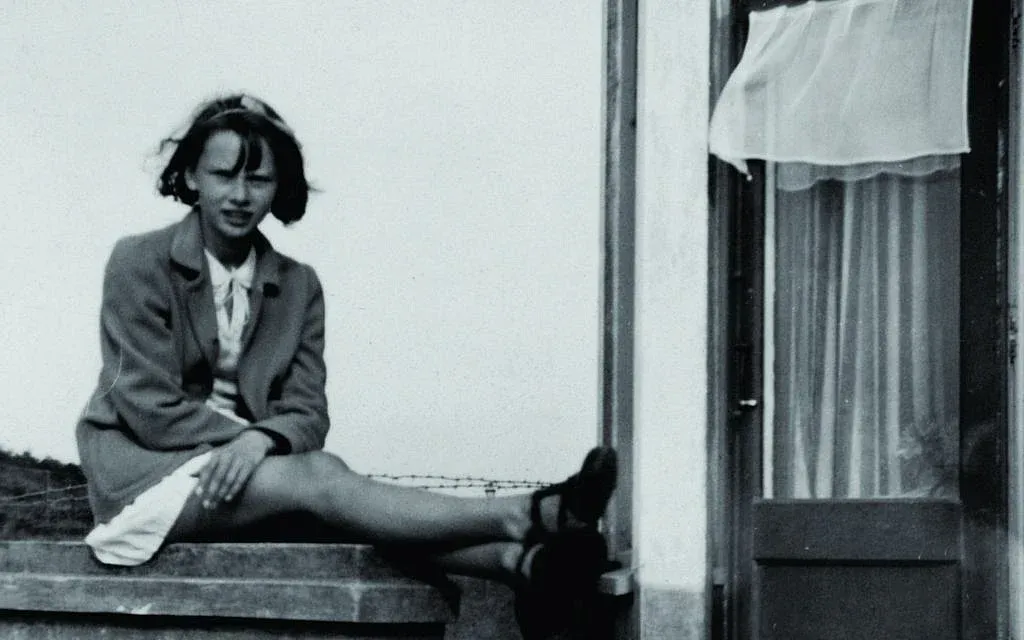
Before she became one of the most iconic faces in cinema history, she was a teenager running messages to downed Allied airmen through occupied Netherlands. But we'll get to that.
She was born in Brussels, Belgium in 1929. Her name was Edda van Heemstra. Her mother? Dutch nobility. Her father, a British businessman who believed himself descended from a Scottish earl. Oh, and he was an enthusiastic fascist. Both parents were, actually. They'd recruited for the British Union of Fascists in the 1930s and knew the Fuhrer personally.
Edda's father left when she was only six and she was subsequently sent to boarding school in England. But when the war broke out in 1939, her mother brought her back to the Netherlands — to Arnhem, where the family had ties. Since the Netherlands had stayed neutral during the First World War, they believed It would stay neutral this time around.
The Nazis invaded in May of 1940 and Arnhem became occupied territory. Edda, now enrolled at the Arnhem Conservatory, focused her attention on ballet, but she wasn't oblivious to what was going on around her. The city was changing--and not for the better. Street signs were now in German. The school curriculum soon followed. Math lessons now taught questions like: if a thousand English bombers attack Berlin and nine hundred are shot down, how many return?
And things only got worse from there. Her beloved uncle was arrested and executed in retaliation for Resistance activity, while her half-brother was deported to a labor camp in Berlin. During the brutal Hunger Winter of 1944-45 — after the Nazis cut off food supplies in retaliation for Dutch railway strikes — civilians turned to tulip bulbs and nettles to survive. And Edda, already suffering from malnutrition and anemia, was among them.
But she didn't just endure. She fought back — in her own way.
She started carrying messages and food to downed Allied airmen hiding in the area. She also delivered the Resistance's underground newspaper by bicycle, hiding it in her socks. And she danced.
The Resistance held illegal concerts called zwarte avonden, or "black evenings," in private homes to raise money for those in hiding. Windows were blacked out. Audiences stayed silent to avoid detection. No one applauded or cheered while Resistance lookouts watched the streets outside. The girl's family attended their first black evening in April of 1944 as audience members, but Edda realized immediately that she couldn't stay in the audience. She started performing herself — in costumes made by her mother, accompanied by a friend at the piano.
She was barely a teenager.
After the war, she moved to Amsterdam and resumed serious study under Sonia Gaskell, one of the Netherlands' most prominent choreographers. Her efforts earned her a scholarship to study in London with the Ballet Rambert, and she modeled on the side to pay the bills. Rambert told her she was talented — but too tall to ever become a prima ballerina.
She took the news in stride and discovered another avenue for her creative pursuits: acting.
You see Edda van Heemstra wasn't her real name. Her mother had changed it during the war because her real name sounded English, which was a problem under German occupation. When it came time to find a stage name, she wound up keeping her father's surname, but dropping the rest. The man who believed himself descended from the Earl of Bothwell had given his daughter, perhaps unknowingly, the most famous name he'll ever be connected to.
She was in her early twenties when she landed the lead in the Broadway production of Gigi. A film called Roman Holiday followed. Then Sabrina. Then Breakfast at Tiffany's, among many others.
Her name was Audrey Hepburn. And if you're inspired to watch some of those films I just mentioned, then head on over to Mometu at mometu.com and click on her picture under Icons of the Silver Screen on the Classics page. There, you'll find Charade, Sabrina, and Roman Holiday all available to watch for free.